Plant Hormones Explained: Auxin, Cytokinin and Gibberellin in Plain English
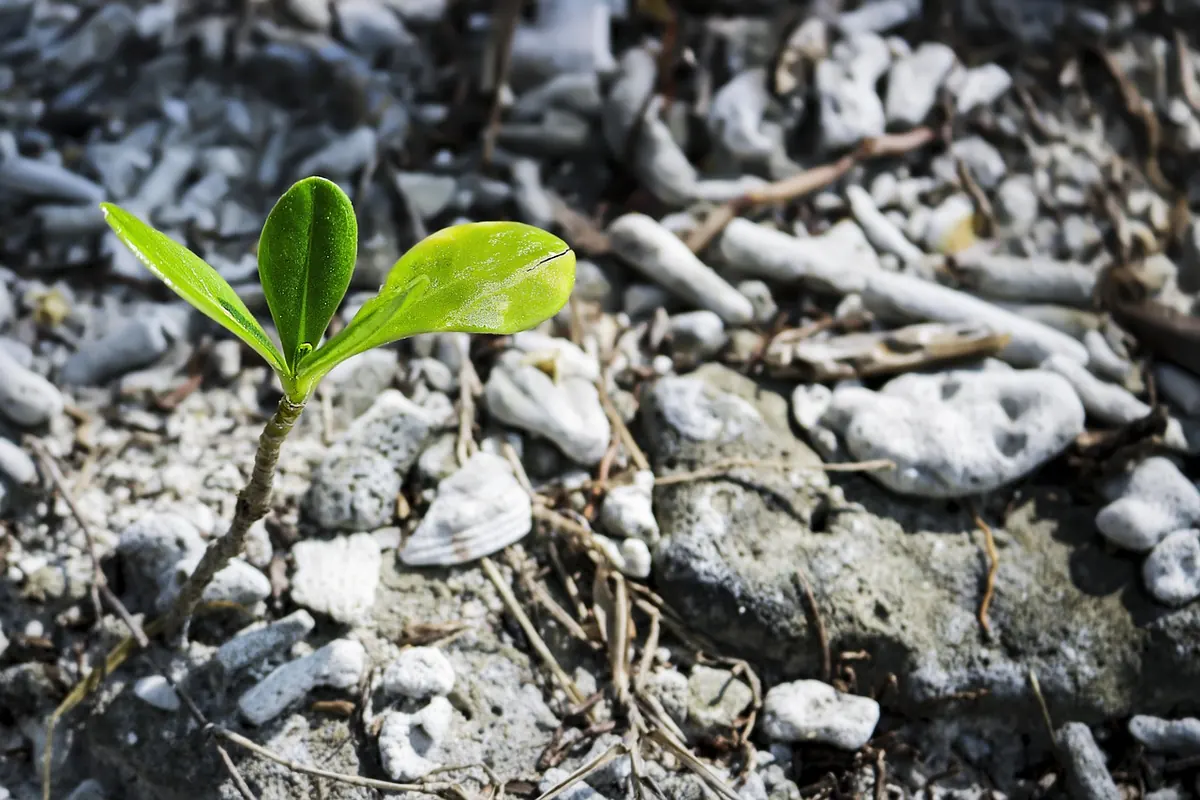
A plant stuck in a shady corner cannot walk into the sun, and one caught by drought cannot go looking for water. So it does chemistry instead. Tiny quantities of signalling molecules — plant hormones — tell cells when to stretch, when to divide, when to drop a leaf and when to ripen a fruit. Five families do most of the work: auxins, cytokinins, gibberellins, ethylene and abscisic acid. Once you know what each one is nudging, a lot of growing stops looking like luck.
Plant hormones, or phytohormones, are made in one tissue and active in another. They travel in the xylem and phloem, or move from cell to cell, and most work at concentrations measured in parts per million or less — often parts per billion. A single gram of auxin, spread thinly enough, would be plenty for a whole garden.
Two consequences follow. First, the same hormone can do opposite things in different tissues: auxin encourages cells in a shoot to elongate, yet suppresses elongation in a root. Second, it is rarely one hormone acting alone — growth is a negotiation between several signals, plus light, water and temperature. Watch the balance rather than any single chemical and plant behaviour becomes far more predictable.
It also helps to think of hormones as votes rather than orders. Each one says stretch here, divide there, wait, or let go. Where the votes point the same way, you see obvious growth; where they cancel out, the plant sits still. Nothing about this is conscious, and nothing about it is instant — most responses take hours or days to become visible.
Auxin is the oldest known plant hormone and the easiest to see in action. The main one, indole-3-acetic acid, is made in shoot tips, young expanding leaves and developing seeds, and it moves steadily downwards, away from the tip. That one-way traffic — polar auxin transport — is unusual and gives the hormone a clear sense of direction.
That downward flow explains phototropism, the bend towards a window. When light falls on one side of a shoot, auxin shifts to the shaded side. Cells there elongate more than the cells in full light, and the shoot curves towards the brighter side. The classic experiments go back to Charles and Francis Darwin, who showed that a grass seedling senses light at its tip but bends lower down — the signal travels.
Auxin also explains gravitropism in roots, in a neat reversal. Auxin gathers on the lower side of a root; because root cells are far more sensitive to it, elongation there is inhibited rather than encouraged, so the upper side grows faster and the root curves downwards. Same molecule, opposite result, purely because of the tissue it lands in.
A shoot tip is a supplier of dominance. Auxin moving down from the leading bud suppresses the buds below it, which is why a young plant often grows as a single stem. Remove that tip and you remove the supply: the lateral buds wake up and the plant bushes out. This is the whole basis of pinching out — fuchsias, basil, petunias, dahlias, chrysanthemums. Pinch just above a pair of leaves and you will usually get two shoots where there was one.
Timing matters as much as technique. Pinch early, while the growth is soft and sappy, and the plant barely notices. Pinch late, when stems have hardened, and you leave a stub that heals slowly and looks untidy for weeks. Always pinch above a node — the point where a leaf joins the stem — because that is where the dormant buds actually sit.
The same logic tells you when not to pinch. If you want a single sunflower head, a straight central stem on a young fruit tree, or a decent standard fuchsia, leave the leader alone.
Synthetic auxins — IBA and NAA — are the active ingredients in rooting powders for cuttings. Dose matters enormously: the same family of chemicals at high concentration acts as a weedkiller, which is why you follow the label rather than guessing. Too weak and the cutting roots slowly; too strong and you burn the base before roots form.
Cytokinins are made mainly in root tips, the opposite end of the plant, and travel upwards in the xylem. Their work mirrors auxin's: they promote cell division, encourage buds to break, delay leaf yellowing and help direct nutrients to where they are needed.
Because the two hormones come from opposite ends, their ratio decides a great deal. High auxin relative to cytokinin tends to favour roots; high cytokinin relative to auxin tends to favour shoots. Commercial growers exploit this in tissue culture to regenerate whole plants from small pieces of tissue. It also explains everyday garden behaviour: a plant with a strong, well-established root system is making plenty of cytokinin, so it branches. A lanky plant in poor soil is not.
Gibberellins, with GA3 the best known, do three showy jobs: they stretch stems, they break seed dormancy, and they push biennials into flowering.
Stretching is the visible one. Gibberellins loosen the bonds between cells in young stems so the cells can take up water and expand lengthwise. A seedling kept in the dark grows tall, thin and pale — a syndrome called etiolation — because gibberellin surges while light is absent. It is a gamble: reach the light before the food reserves run out, or die trying.
The effects can be dramatic. A grape variety with unusually long, loose bunches can be treated with GA3 to produce bigger berries and a tidier cluster. Celery is treated to lengthen the stalks. But the most consequential example is agricultural: the semi-dwarf wheat and rice varieties of the Green Revolution were short precisely because they responded less strongly to gibberellin. Shorter stems meant less lodging — fewer crops flattened by wind and rain — and more grain instead of straw. That single trait helped feed a large part of the world.
Biennials such as cabbage, beetroot, carrot and parsley normally need a cold spell before they will flower, a process called vernalisation. Gibberellin can partly substitute for that cold. Spray it on a biennial that has not been chilled and it may run to flower anyway — useful in research, and a reminder that "bolting" is a hormone event, not simply a reaction to warm weather.
Seeds use gibberellin as their starting pistol. Many seeds contain a supply that is released once conditions are right, prompting the aleurone layer to mobilise food stores and the embryo to grow. Soaking hard-coated seeds, or pre-chilling them in the fridge, mimics the natural cues that trigger this release.
Ethylene is the odd one out: a simple gas, not a liquid travelling through the plumbing. It drifts through air spaces between cells — and out into the room around the plant.
That last detail is the one every kitchen knows. Ethylene triggers ripening in climacteric fruit such as bananas, apples, tomatoes and avocados, and it is self-reinforcing: a ripening fruit makes more ethylene, which ripens it further. Put one ripe banana in a paper bag with hard avocados and the gas does the work for you. Leave a bruised apple in a bowl of fruit and everything nearby goes over faster.
Ethylene also drives abscission — the deliberate shedding of leaves, flowers and fruit — and the autumn colour change that precedes it. It triggers the triple response in seedlings that meet an obstacle underground: the stem shortens, thickens and bends sideways, pushing around the stone rather than into it.
Practical consequences are easy to act on. Keep cut flowers away from the fruit bowl, since ethylene shortens their vase life. Avoid storing ripe and unripe produce together. Ventilate greenhouses, because trapped ethylene causes leaf drop and distorted growth. And remember that a plant near a ripening fruit can look sick for reasons no feed or fungicide will fix.
Despite the name, abscisic acid has little to do with shedding leaves — that is mostly ethylene's job. Its real speciality is stopping things.
When a plant runs short of water, abscisic acid is produced in the roots and leaves and closes the stomata, the tiny pores through which water vapour escapes. It is a trade-off the plant cannot avoid: shut the pores to save water, and you also shut out carbon dioxide for photosynthesis. Wilting is what happens when the trade-off fails. The hormone also enforces dormancy — in seeds, keeping them asleep until conditions improve, and in buds, protecting them through winter.
Much of the work on drought-tolerant crops now targets this pathway, aiming for plants that close their stomata earlier and reopen them faster. It matters for containers too: a plant that has been allowed to dry out repeatedly becomes slow to resume growing even after you water it properly.
None of this requires a laboratory. Most of it is about reading what you already see.
Hormones explain a great deal, but they are not a fix for poor growing conditions. No spray will compensate for a plant in the wrong place, in the wrong compost, at the wrong time of year. Auxin in a rooting powder cannot rescue a cutting taken from soft, rotting growth, and cytokinin cannot keep a houseplant alive in a dark hallway.
Treat the five families as a way of explaining what you observe, and the decisions follow naturally. Pinch to redistribute auxin. Improve light so leaves stop stretching. Ripen fruit deliberately with ethylene rather than by accident. Water steadily so abscisic acid does not spend all summer with the brakes on. Plant behaviour stops being mysterious and starts being readable — which is really what most gardeners are after.
Photo: truthseeker08 / Pixabay
Previous Post
Native British Wildflowers for Small Gardens: A Beginner's Planting Guide
Next Post
How to Keep a Plant Science Notebook: A Checklist for Home Experiments