Common Mistakes When Watering Indoor Plants in Winter
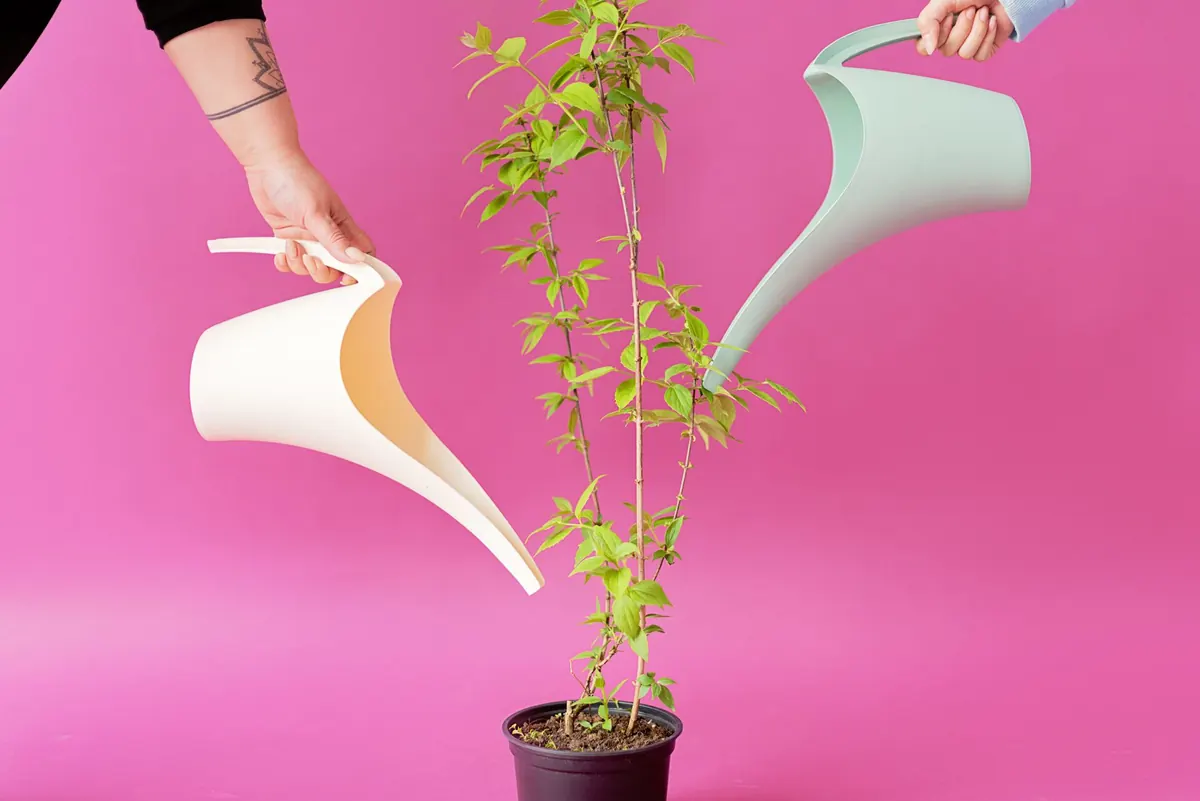
Indoor plants are far more likely to be killed by the watering can in winter than by the cold. Light levels fall, windowsills turn chilly, and compost that dried out in three days in July now sits damp for a fortnight. The plant has slowed down; the routine has not.
That mismatch explains most winter trouble: yellowing lower leaves, soft dark stems, sour-smelling compost, and clouds of tiny flies lifting off the surface when you water. None of it is mysterious once you know what has changed.
Light is the engine of everything a plant does. Photosynthesis drives growth, growth drives water uptake, and water uptake is what empties a pot. Cut the light a window receives — which is roughly what a British winter does — and demand for water falls with it.
Temperature matters too. Transpiration, the process that pulls water up through the roots and out through the leaves, slows in a dim, cool room. Central heating complicates the picture: it dries the air, which can pull moisture from leaves faster, even while overall growth has stalled. The result is a plant that looks thirsty but is sitting in wet compost.
Species matter as much as season. A Monstera or a fern from a damp forest understorey will keep drinking slowly through winter. A jade plant, a cactus or a caudex plant such as a ponytail palm is adapted to a dry rest and will sulk if kept moist. Treat them differently, not identically.
If you water every Sunday because that worked in June, you are feeding a habit rather than a plant. In winter, the gap between waterings can easily double or triple. A pot that needed a drink every five days in summer may go three weeks in a dim, cool room.
Ditch the schedule. Check each plant individually, and accept that two pots on the same windowsill will now empty at different rates. It is perfectly normal to water a thirsty fern and walk straight past the rubber plant beside it.
The top centimetre of compost dries first, because that is where the air reaches it. Two or three centimetres down it can still be soaked. If you water whenever the surface looks pale, you will overwater consistently through the darker months.
Push a finger in up to the second knuckle, roughly three to four centimetres. For most foliage plants, water when the compost feels barely damp at that depth. For succulents, cacti and anything resting over winter, wait until it is dry all the way down.
Lift the pot. A freshly watered 20 cm pot is surprisingly heavy; a week later it feels light and hollow. Weigh it in your hands once before and once after watering, and your arms will remember the difference. It is the quickest check for anything in plastic with a large saucer.
A wooden skewer or chopstick pushed down to the base and left for a minute comes out clean and dry when the pot is ready, and cool and streaked with compost when it is not. Ideal for deep pots and plants you cannot easily lift, such as a large ficus in a heavy ceramic planter.
Also check what the pot is made of. Unglazed terracotta breathes and dries faster, which helps in winter. Glazed ceramic and plastic hold moisture for longer, so plants in them need a lighter hand. A small root ball in a large pot is the worst combination of all: a lot of wet compost and very few roots to drink it.
Watering until it runs out of the drainage holes is good practice — it flushes salts and reaches the whole root ball. Leaving the pot sitting in that puddle is not. Within half an hour the compost wicks the water back up, and the lower roots stay in a saturated, oxygen-poor layer.
Roots need air as much as water. When compost stays wet for days, fine roots suffocate and rot, and opportunistic pathogens move in. The early signs are easy to miss: lower leaves yellowing, new growth small and pale, the plant looking limp even though the compost is wet. Later you may see soft black stems, mushy brown roots that smell sour, or leaves dropping from the middle of the plant.
If you suspect root rot, take the plant out, rinse the roots and cut away anything soft, brown and smelly with clean scissors. Repot into fresh compost, ideally in a slightly smaller pot, and water sparingly until you see new growth. Empty every saucer fifteen to twenty minutes after watering, without exception.
Fungus gnats are the small dark flies that appear from nowhere and gather on the compost. Their larvae live in the top few centimetres, feeding on damp organic matter and fine roots. Adults are harmless; the larvae and the constant moisture they indicate are the real problem, particularly for seedlings and small plants.
To break the cycle:
Avoid misting in winter as a humidity fix. It raises humidity for minutes, not hours, and wet foliage in cool, dim conditions invites fungal leaf spots. Grouping plants together, or standing pots on a tray of pebbles above water, does more good.
Two homes can have identical plants and completely different watering needs. Check these before deciding anything:
Get this right and winter becomes the quiet season rather than the lethal one. Plants that come through it slowly, with intact roots and dry-ish compost, are the ones that surge away in March. When in doubt, wait another day — almost nothing in a dim January room is harmed by being left one more day.
Photo: Mikhail Nilov / Pexels
Previous Post
Do Houseplants Grow Better with Coffee Grounds? A Simple Controlled Experiment
Next Post
Native British Wildflowers for Small Gardens: A Beginner's Planting Guide